ROI & Biomechanics: The Gym Owner’s Guide to Selecting the Perfect Leg Curl Machine
1. Biomechanics: The "Feel" is Everything
Why do members love some machines and avoid others? It comes down to the resistance curve. A poorly designed leg curl machine places unnecessary shear force on the knee joint or loses tension at the peak of the contraction.
When evaluating a manufacturer, look for Axis Alignment. The machine’s pivot point must align perfectly with the user’s knee joint axis.
-
The Science: According to the National Strength and Conditioning Association (NSCA), proper joint alignment is critical to prevent patellar tendon stress during isolation movements.
-
What to look for: Machines with self-aligning roller pads or highly adjustable pivot points that accommodate users ranging from 5'0" to 6'6".
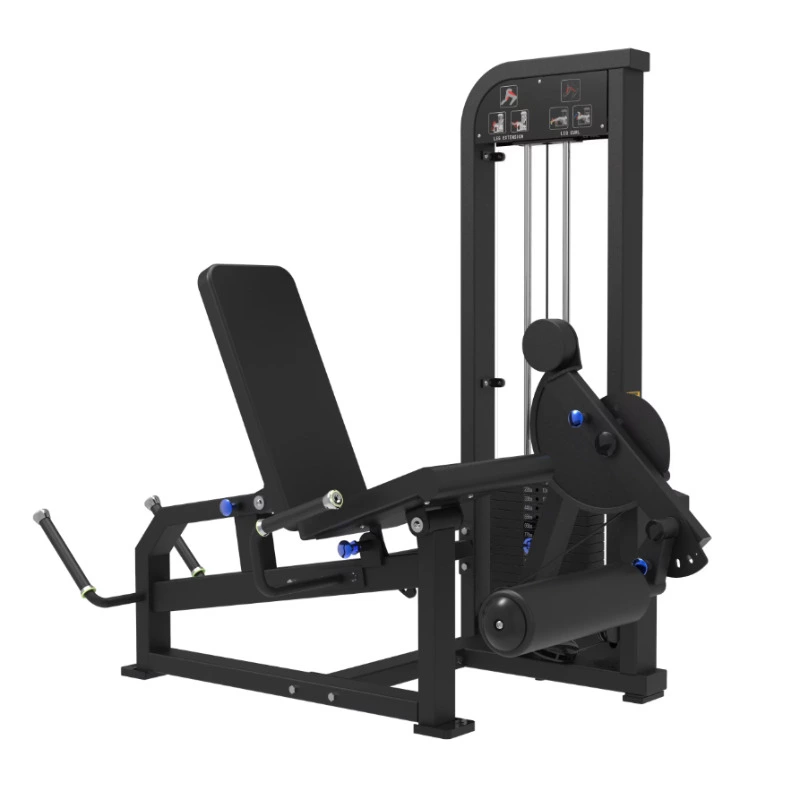
Pro Tip: Look for a "Cam" system (the kidney-shaped pulley). A well-engineered cam alters the leverage throughout the movement to match the muscle's natural strength curve—easier at the start, harder in the middle, and tapered at the end.
2. Durability: The 11-Gauge Standard
In a high-traffic commercial gym, equipment failure is a nightmare. It leads to "Out of Order" signs, which are silent killers of your brand reputation.
For B2B buyers, the material specification is the first question you should ask.
-
Frame Integrity: The global gold standard for commercial equipment is 11-gauge steel (approx. 3mm thickness). Anything thinner (like 13 or 14 gauge) is suitable for home use but will wobble and warp under commercial wear and tear.
-
Cables and Pulleys: Ensure the cables are aircraft-grade (rated to 2,000+ lbs tensile strength) and the pulleys utilize sealed bearings for maintenance-free operation.
A report by IHRSA (The Global Health & Fitness Association) highlights that equipment durability is a top 3 factor influencing member renewal rates. Don't compromise on the frame. Source: IHRSA Global Report
3. Multi-Functionality vs. Space Efficiency
Real estate is expensive. Whether you are running a boutique studio in London or a large box gym in Texas, floor space implies revenue per square foot.
Modern manufacturing has shifted towards Dual-Function Machines (e.g., Leg Curl / Leg Extension Combo) or versatile adjustments that allow for both Prone (lying) and Seated Leg Curls.
-
Prone Leg Curl: Better for isolating the hamstring muscle belly and minimizing hip flexion.
-
Seated Leg Curl: Often more comfortable for older populations or those with lower back issues.
At Cheernin, we engineer our machines to maximize utility without a massive footprint, ensuring you get the best of both biomechanical worlds.
4. User Experience (UX): Adjustability and Upholstery
Your members shouldn't need an engineering degree to adjust the seat. The "Pop-pin" mechanisms must be intuitive, color-coded (usually yellow or red), and smooth.
-
Upholstery Matters: Commercial vinyl needs to be sweat-resistant and double-stitched. High-density foam is crucial—too soft, and the user lacks stability; too hard, and it causes discomfort during heavy lifts.
-
The Handle Position: During a heavy leg curl, the user needs to brace their upper body. Ergonomically placed handles prevent the hips from rising off the pad, ensuring the load stays on the hamstrings, not the lower back.
Research from the American Council on Exercise (ACE) suggests that stability is a key component in effective isolation training. If the user creates momentum by moving their hips, the exercise loses efficacy. Source: ACE Fitness Research
5. The Manufacturing Advantage: Why Buy Direct?
Sourcing directly from a manufacturer like Cheernin offers distinct advantages over buying through third-party trading companies:
-
Cost Efficiency: Eliminating the middleman improves your margin.
-
Customization: Need your brand's color on the frames? Need specific logo embroidery on the pads? Factories can execute this; traders usually cannot.
-
After-Sales Support: Access to spare parts is faster when dealing with the source.
Final Verdict: Making the Right Choice
Selecting a Leg Curl machine is a balance of Biomechanics (Safety), Engineering (Durability), and Economics (Price).
For the B2B buyer, the goal is "Set and Forget"—installing a machine that performs flawlessly for years.
At Cheernin, we combine rigorous biomechanical testing with industrial-grade manufacturing to produce equipment that rivals the biggest names in the industry, at a price point that makes sense for your business model.
Ready to upgrade your gym floor?
Check out our latest Leg Series Specification Sheet here or contact our export team for a wholesale quote today.